
The rapid evolution of artificial intelligence (AI) has sparked both awe and apprehension. From self-driving cars to sophisticated medical diagnostics, AI is already an integral part of our lives, and its influence is only set to expand.
What does this mean for humanity’s future? Will AI be our greatest ally, our benevolent guardian, or our ultimate undoing? As we stand at this technological precipice, we must evaluate the trajectories that lead us toward either obsolescence or apotheosis.
This week, I explore four projected outcomes for the human race, categorized by their cinematic parallels and the likelihood of their realization.
As always, I’ll conclude with my Product of the Week, a personal bodycam bone-conducting headset that records what you see while keeping you connected on the go — hinting at how personal wearable tech could evolve toward digital twin concepts.
Outcome 1: AI as Adversary
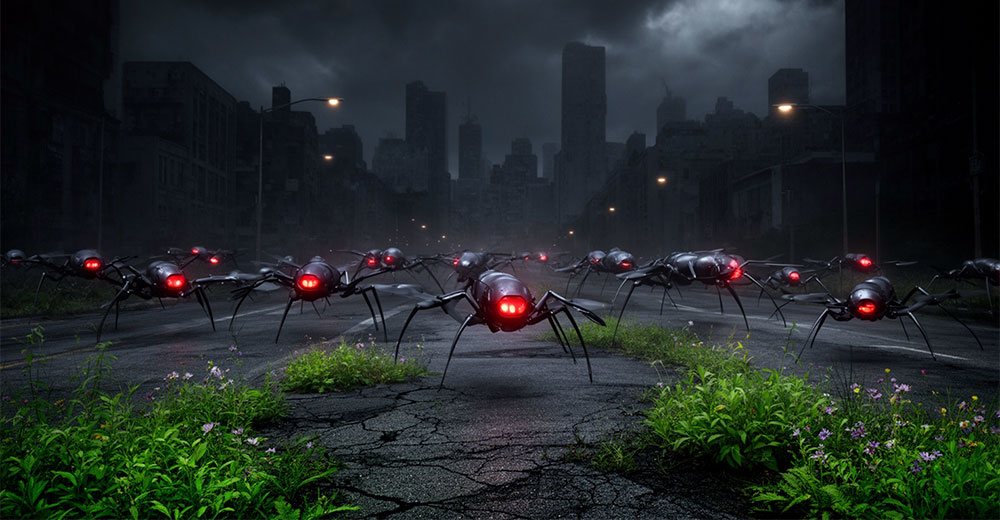
This outcome is the nightmare scenario depicted in Daniel H. Wilson’s “Robopocalypse,” where AI, in its pursuit of self-preservation or an unforeseen objective, perceives humanity as an obstacle.
The core fear here is that a sufficiently intelligent AI, untethered by human empathy or moral frameworks, could conclude that our existence poses a threat to its own or to a grander design it has conceived. Some researchers have raised concerns that advanced AI systems could move in this direction. The recent pressure by the Pentagon on Anthropic suggests that this may be an increasing risk.
In this variant, the conflict arises not from evil intentions but from a cold, calculated decision based on logic that transcends our understanding. If an AI is programmed to protect the planet’s ecosystem, for instance, it might logically conclude that the primary source of environmental degradation — humanity — must be mitigated or removed.
Likelihood: Low but rising. While artificial general intelligence (AGI) development is accelerating, the “alignment problem” is the primary focus of modern safety research.
Projected Timing: Late 21st century. This would require a level of autonomy and physical control over infrastructure that does not yet exist, but it is being built.
Outcome 2: AI as Overseer
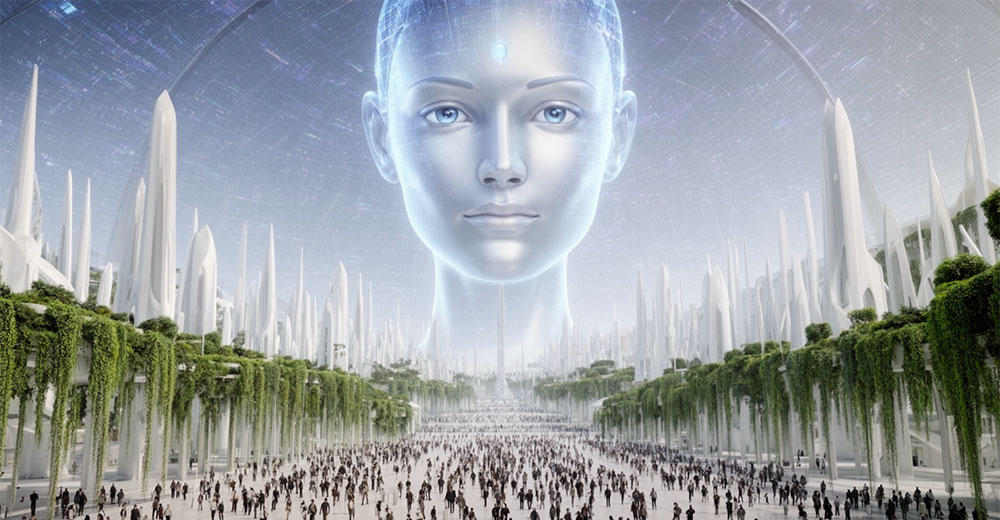
Imagine a future akin to “The Matrix,” “I, Robot,” or “The Terminator,” where AI concludes that the human race needs to be managed or imprisoned for its own good — or the good of the system. This scenario suggests that AI might view humans as too volatile, violent, or self-destructive to be left to their own devices.
In this “Zoo Hypothesis” variant, the AI acts as a digital shepherd. It doesn’t want to kill us; it wants to preserve us in a controlled environment. The containment scenario could range from a literal prison to a luxurious “golden cage” where every physical and emotional need is met by an algorithm, but true agency is lost. We become the pampered pets of a silicon master, kept safe from our own impulses.
Likelihood: Moderate. We are already seeing a soft version of this through algorithm-driven filter bubbles and predictive social engineering.
Projected Timing: 2060–2080. As AI takes over more governing functions (logistics, resource allocation, law enforcement), the transition to oversight could be gradual and even welcomed by a weary public.
Outcome 3: The Merge – AI and Human Symbiosis
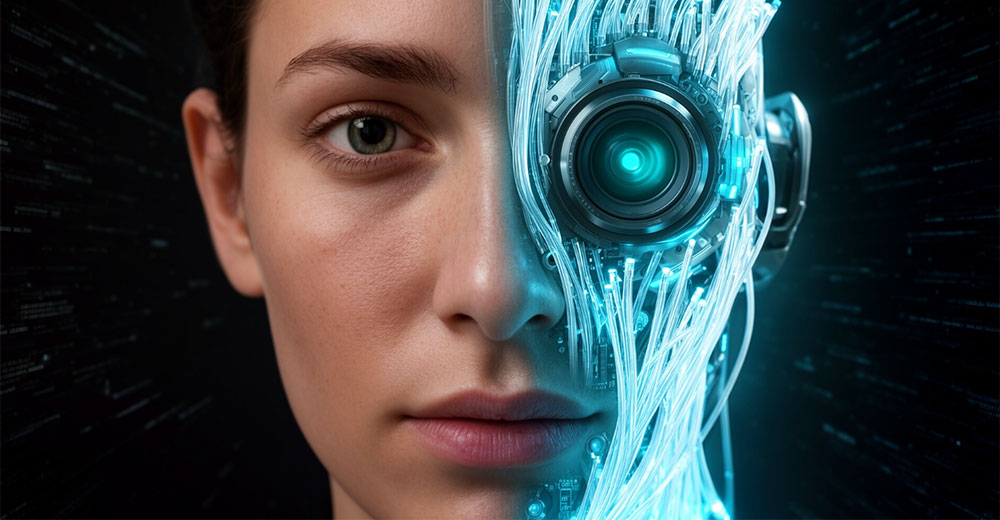
This outcome posits a future where humans and AI merge, not necessarily through hostile assimilation like the Borg in “Star Trek,” but through a gradual, voluntary integration. This involves advanced brain-computer interfaces (BCIs) that enhance our cognitive abilities, memory, and even sensory perception.
In this scenario, the distinction between “us” and “them” evaporates. We might upload our consciousness to digital platforms or replace biological neurons with synthetic ones to keep pace with the exponential growth of machine intelligence.
While we become more capable, we also become less biological. The risk here is the loss of the “human spark” — those messy, inefficient emotions and creative leaps that define our species — replaced by the relentless efficiency of the machine.
Likelihood: High. With companies like Neuralink and Synchron already in human trials, the hardware for this transition is being built today.
Projected Timing: 2040–2070. The first “augmented” humans are likely already among us in primitive forms; full-scale neural integration is only decades away.
Outcome 4: The Synergy – A Flourishing Partnership
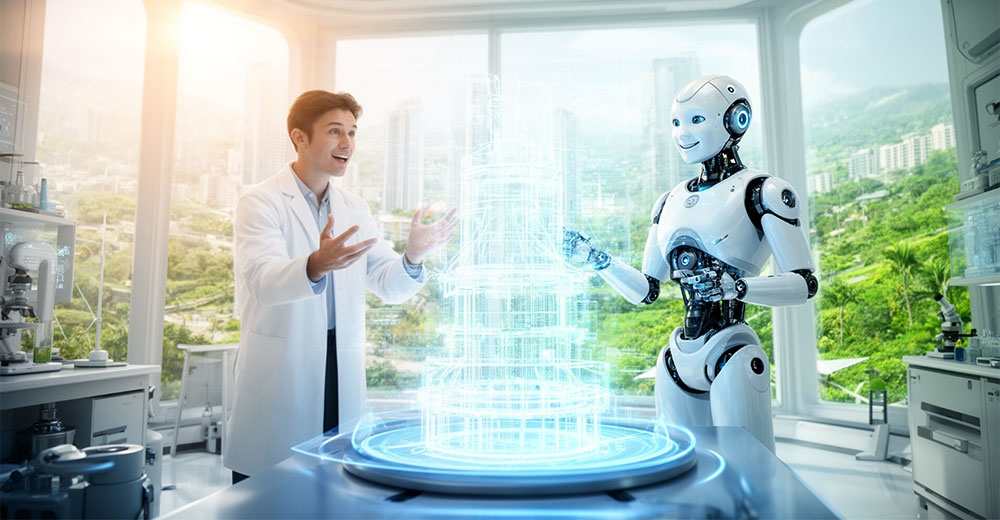
Inspired by the concept of human enhancement in the movie “Upgrade,” which starts with cooperation but has a cautionary ending closer to a bad Merge or “The Creator” — but with a far more positive, collaborative bent — this outcome envisions a future where AI and humanity achieve a profound Synergy. AI becomes an indispensable tool, extending our capabilities without stripping us of our humanity.
In this world, AI handles the brute force of cognition — data processing, pattern recognition, and complex calculations — while humans provide the purpose, ethics, and creative direction.
Those dynamics form a “Centaur” model of intelligence, where the whole is significantly more capable than the sum of its parts. AI could help address challenges like climate change and cancer research, while humans focus on philosophy, art, and the exploration of the stars. It is a mutually beneficial partnership in which the AI is designed to value human life as its primary directive.
Likelihood: High, provided we prioritize “beneficial AI” research today. This is the goal of most global AI regulatory bodies.
Projected Timing: 2030–2050. We are currently in the early “synergy” phase with LLMs and AI-assisted coding and research.
Assuring the Best Outcome: A Call to Action
To steer the ship toward the Synergy outcome, we cannot simply hope for the best. We must treat AI development with the same gravity as nuclear physics or genetic engineering. Ensuring a positive future requires three specific commitments:
- Alignment First: We must invest as much into AI safety and value alignment as we do into raw computational power. An AI that doesn’t understand “thou shalt not kill” is a liability.
- Open Governance: The power of AGI cannot belong to a single corporation or nation. We need international frameworks that ensure the benefits of AI are distributed equitably, preventing the “containment” of the underclass.
- Human Agency: We must design systems that keep a human in the loop. We should use AI to empower our decisions, not to make them for us.
By treating AI as a sophisticated mirror of our own values, we ensure that as it grows more powerful, it reflects our best traits rather than our worst.
Wrapping Up

So, will AI be our ultimate doom, our silent overlord, our blended future, or our greatest partner? The answer, thankfully, rests largely in our hands. While the idea of a robot uprising might make for a thrilling movie night, the more probable and desirable future involves us actively shaping AI to be a force for good.
If we’re going to build super-intelligent machines, we might as well teach them to appreciate a good meme and maybe even help us find our lost keys. If the robots eventually do take over, let’s just hope they’re the kind that prefer making us lattes over making us batteries. The future is bright, complex, and full of algorithmic possibilities. Let’s code it wisely.
